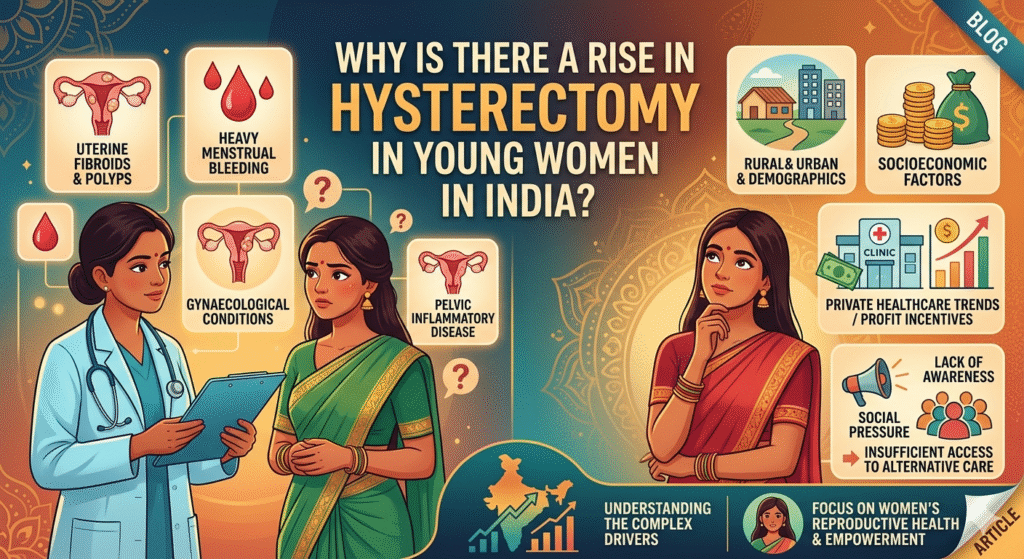
In the recent past, India has seen an increase in the number of hysterectomies carried out on women. The increase has been seen mostly in women in their 30s and early 40s. The surgery was previously carried out mostly on older women. However, in recent times, it has been carried out at a much younger age.
A hysterectomy is the surgical removal of the uterus. The surgery is usually required in some cases. However, the increasing number of younger women undergoing the surgery has led to one question: Why is this happening?
Understanding the scale of the problem
The increase in hysterectomies in young women is not only an anecdotal experience, as there is also data to support this. Nearly 1 in 10 Indian women undergo hysterectomy by age 50. The median age of hysterectomy is about 34-37 years, which is almost a decade before natural menopause. The prevalence of hysterectomies is higher in states such as Andhra Pradesh and Telangana, with some cases exceeding 20%. This, in itself, is an indication that hysterectomies are being conducted at an early age.
Major reasons for the rise of hysterectomy rates in India
Countless studies show that the surgical procedure of hysterectomy is being performed at relatively younger ages in the country. In India, the median age for hysterectomy is around 37 years, which is significantly lower than the average age of natural menopause, which falls around 48 years. From cultural influences, lack of awareness, or socioeconomic factors, there are many reasons for it.
High prevalence of gynaecological issues: One of the leading causes of increased rates of hysterectomy in India is heavy menstrual bleeding. Amongst other conditions, some of the major ones are uterine fibroids, ovarian cysts, and uterine prolapse, which can all ultimately lead to requiring a hysterectomy.
Limited access to alternative treatments: A large sector of the Indian population lacks access to high-end healthcare facilities or even awareness regarding women’s health. Many regions, especially rural areas, do not have easy access to non-surgical treatments. Sometimes, doctors even recommend it as a quicker option.
Socioeconomic and healthcare factors: Hysterectomy rates can also increase because of factors like lack of education and awareness in rural areas. Factors like socioeconomic status, access to private healthcare, incentives of private clinics, and sheer lack of work and healthcare regulations can lead to impulsive decisions on hysterectomy.
Lack of awareness about consequences: For many women in India, surgical procedures like hysterectomy have become an easy choice. This is often because of a lack of awareness of the dire consequences it can have on one’s health, as well as the importance of preserving hormonal health and exploring alternative options.
Cultural and social influences: In many communities in India, women’s reproductive health is not given as much importance as it deserves, especially if they have completed their family with birthing children. Often, a hysterectomy is even seen as a convenient solution, without paying heed to the consequences.
Poor menstrual health infrastructure: Even in today’s age and time, menstrual health remains in the backseat in many communities and rural areas. This may show up as a lack of access to sanitary products, limited cleanliness, and prevalent cultural stigmatization. In such cases, hysterectomy may be seen as a way to eliminate menstrual discomfort altogether.
Overmedicalization and private healthcare practices: Around two-thirds of hysterectomy procedures are carried out in private clinics and hospitals in India. More often than not, hysterectomies are based on a profit-driven decision, which can lead to premature or unnecessary surgeries, especially when it comes to vulnerable groups.
Misinterpretation of hysterectomy as a permanent solution: Often, women tend to assume that the surgical removal of the uterus and/or ovaries will solve their health problems completely without any consequences. The risks that come with the procedure, along with hormonal and cardiovascular health, are usually neglected.
Health risks linked to early hysterectomy
Hysterectomy, as a surgical procedure, should only be carried out when it is completely necessary and the best possible option for your health. Getting a hysterectomy done at an early age can pose some risks.