Uterine fibroids are among the most frequent gynecologic problems that affect women of childbearing age. Also referred to as leiomyomas, these benign tumours arise in or around the uterus and can be quite diverse in terms of their size, ranging from minute, seed-like lesions to massive lesions that alter the uterine shape. Even though uterine fibroids are benign, their symptoms can have a profound impact on the quality of life and health of affected women.
Understanding what causes fibroids, how they present, and the best available treatment options is crucial for making informed decisions for your own self. We often have such questions about fibroids, which have varied answers but incomplete ones at that. Which size of fibroid is dangerous? Or is there treatment for fibroids without surgery? Let us dive deeper into this.
What Are Uterine Fibroids?
Fibroids are smooth muscle tumors that originate from the muscular layer of the uterus. They are hormone-sensitive, especially estrogen and progesterone, and this explains why they usually grow during the reproductive years and regress after menopause.
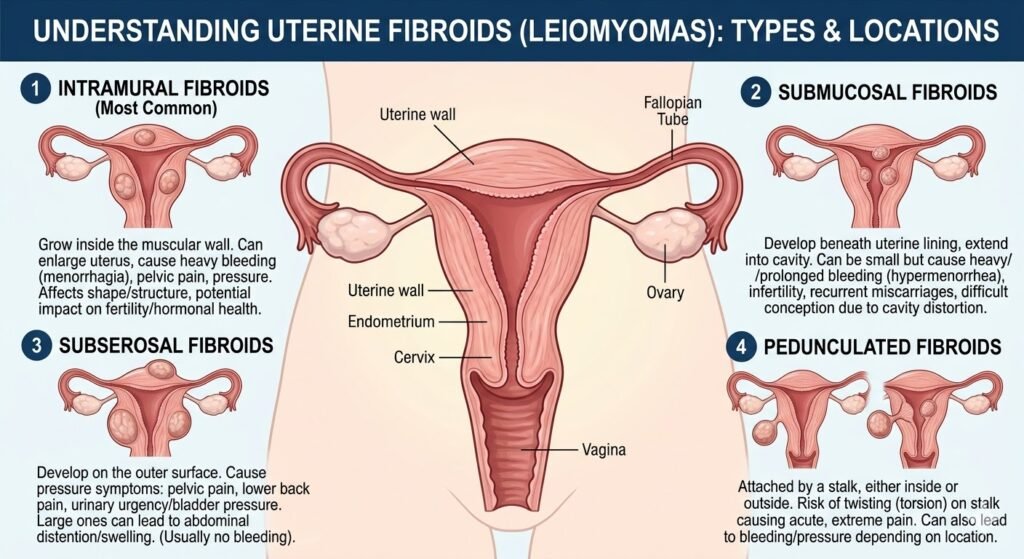
Fibroids are classified into many categories, mainly based on their location. They differ from Intramural fibroids, Submucosal fibroids, Subserosal fibroids, and Pendiculated fibroids. Each of these also differs in size, and that plays a huge role in symptoms. For instance, smaller fibroids may not show any symptoms at all sometimes, while fibroids that are relatively larger often result in pain, feelings of pressure, and even heavy bleeding.
These fibroids occur inside the muscle wall of the uterus. They are the most common type of fibroids. When these fibroids grow or mutate, they may cause the uterus to become enlarged, leading to heavy menstrual flow, pelvic pain, and pressure. They can even impact fertility and hormonal health by changing the shape or structure of the uterine cavity.
Submucosal fibroids are those that develop just beneath the lining of the uterus and extend into the uterine cavity. These fibroids can be quite problematic, even if they are small, as they can lead to heavy menstrual bleeding, prolonged bleeding, and infertility. These fibroids can also lead to recurrent miscarriages or difficulties in conception due to the distortion of the uterine cavity.
Subserosal fibroids develop on the outer surface of the uterus. While they may not cause bleeding, they have the potential to cause symptoms of pressure, pelvic pain, lower back pain, as well as urination if they press against the urinary bladder. Large subserosal fibroids may also cause abdominal distention or swelling.
Pedunculated fibroids are usually attached to the uterus by a stalk, either inside or outside the uterus. They can twist around the stalk, which can cause unpredictable and extreme pain. They can also lead to bleeding or feelings of pressure, depending on where they are, much like submucosal or subserosal fibroids.
Heavy menstrual bleeding, extreme pain or consistent cramps are some of the most common symptoms caused by uterine fibroids. Let us understand why and how this happens. Fibroids essentially have the potential to enlarge the surface area of the uterine cavity. As a result of this, heavier bleeding and pain are experienced. The amount of bleeding during menstruation also depends on the type and size of the fibroid.
For instance, submucosal fibroids have the power to disintegrate or change the structure of the uterine cavity. This can impact the normal functioning of how uterine contractions take place. Fibroids can weaken the process of uterine contraction, which is supposed to help in managing the amount of bleeding during periods. This plays a huge role in heavier bleeding. Not just this, fibroids also have the power to create and heighten blood vessel formation in the uterine wall. This, in turn, contributes to heavy bleeding as well.
Your monthly cycle and period flow can be impacted by many things, uterine fibroids being one of the major ones. In fact, when it comes to fibroids, abnormal menstrual bleeding is one of the main symptoms indicative of their very presence. But how can you exactly draw the line between normal blood flow and excessive bleeding? Here are some of the basic things you should keep an eye on.
Keep in mind that excessive menstrual bleeding can even lead to anemia, chronic fatigue, high amounts of dizziness or bodily pain and weakness. All of these should not be put to risk and must be taken care of early on.
One of the most common worries when it comes to fibroids is the size and how much danger it poses. Even though every fibroid should be taken care of as soon as the evaluation is done, larger fibroids, typically above the size of 5 cm, are more likely to cause greater complications. In some cases, fibroids are as small as a single centimeter, whereas in many severe cases, the size can even go up to 15 to 20 centimeters at a stretch.
Fibroid size has a huge impact on the danger it can pose. Therefore, it is very important to look out for some signs that should alert you immediately. If the fibroid causes you severe pain, leads to extreme pelvic pressure or even results in heavy menstrual bleeding, consider it a red flag. Fibroid size also has an effect on neighbouring organs like your bladder and can even impact your bowel movement. In some cases, fibroids may also negatively affect your fertility and hormonal health.
The answer to this question can vary for every individual. Depending on the age of the person, size of the fibroid, type and classification, severity of symptoms, fertility goals, and a well-rounded health evaluation, the choice of treatment can differ. From carefully waiting, dietary changes, to surgical procedures, the treatments vary across a large range.
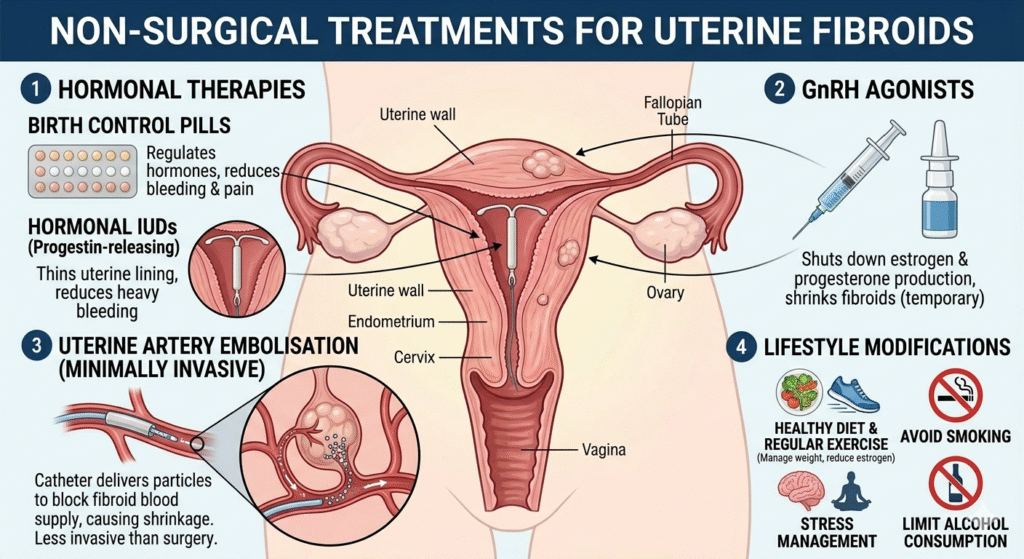
Many times, fibroids are treatable with many options other than surgical procedures. If your symptoms are not as worse and are at a stage where they can easily be managed, many non surgical procedures can prove to be helpful. Some of these non-surgical options you can keep in consideration are:
It is important to understand that these methods concentrate on shrinking the fibroids and controlling menstrual bleeding in an abnormal amount. They focus on reduction of symptoms through medications, minimally invasive procedures, dietary changes and lifestyle transformation in a healthy manner.
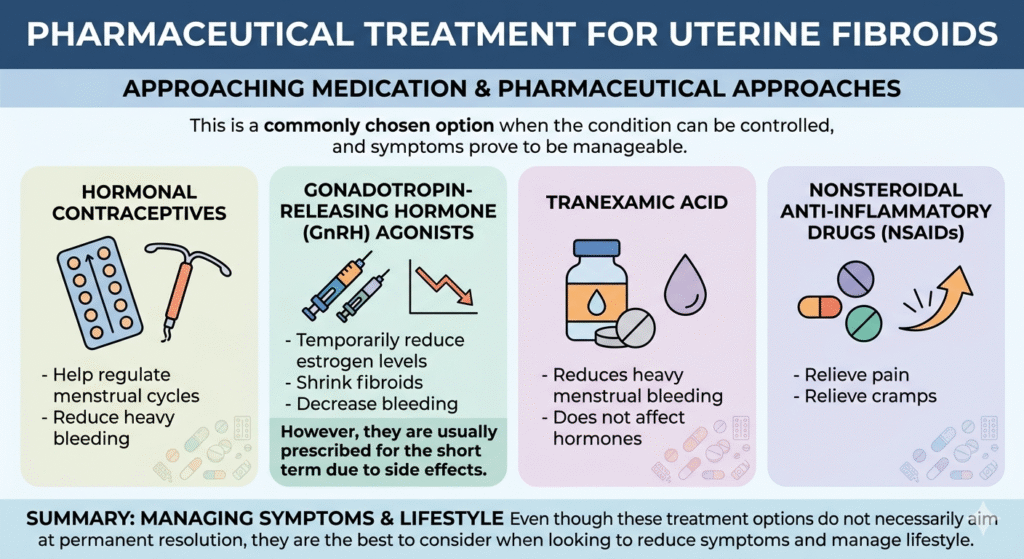
Approaching medication and pharmaceutical approaches for fibroid treatment is one of the most commonly chosen options, especially when the condition can be controlled, and symptoms prove to be manageable.
Even though these treatment options do not necessarily aim at permanent resolution, they are the best to consider when looking to reduce symptoms and manage lifestyle.
Heavy menses are usually associated with iron deficiency anemia. As the level of iron decreases, the patient is likely to experience symptoms such as tiredness, pallor, breathlessness, and bodily weakness. Taking iron supplements can increase iron levels and boost bodily activity and strength. In cases of moderate to severe anemia, the following may be prescribed:
Anemia is a worsening symptom of fibroids, and can impact your health in a severe manner if not taken care of at an early stage. It is important to make necessary lifestyle changes and include iron supplements if they prove to sustain higher improvement.
Dietary changes, in fact, are one of the most crucial ones that have the power to positively impact your health and heal you for the better. Even though diet can not directly shrink or remove fibroids, it for sure impacts your hormone cycle, inflammation in the body, and regulation of your menstrual cycle.
Some of the foods you should definitely look to include in your diet are leafy greens due to their high potency in iron, fruits that are high in antioxidants like many berries, anti-inflammatory foods, whole grains and legumes, as well as foods that are rich in Omega-3 fatty acids.
Along with dietary inclusions like the ones mentioned above, you should also focus on reducing the consumption of processed foods, red meat, products high in sodium levels, and avoiding the intake of alcohol. Essentially, the focus is on maintaining a healthy diet as well as a healthy weight. Excessive weight or fat storage often leads to an increase in estrogen production, which can very much be a cause of fibroid growth.
Certain supplements can also exacerbate hormonal disorders. Excessive doses of estrogenic supplements or phytoestrogens can actually cause the stimulation of the growth of fibroids. Women with fibroids should definitely be wary of unregulated hormone supplements, excessive doses of soy isoflavones, and excessive doses of vitamin E.
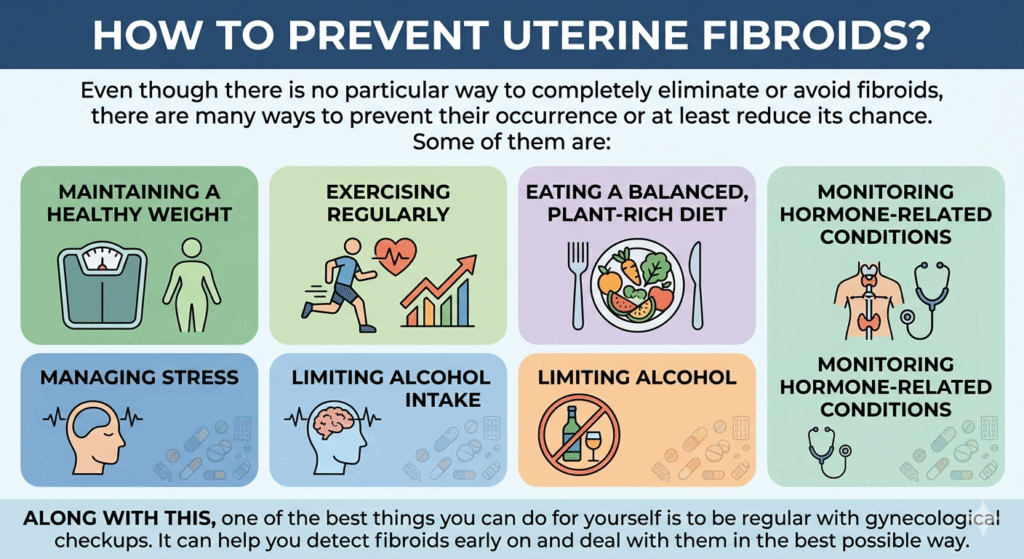
Even though there is no particular way to completely eliminate or avoid fibroids, there are many ways to prevent their occurrence or at least reduce its chance. Some of them are:
Along with this, one of the best things you can do for yourself is to be regular with gynecological checkups. It can help you detect fibroids early on and deal with them in the best possible way.
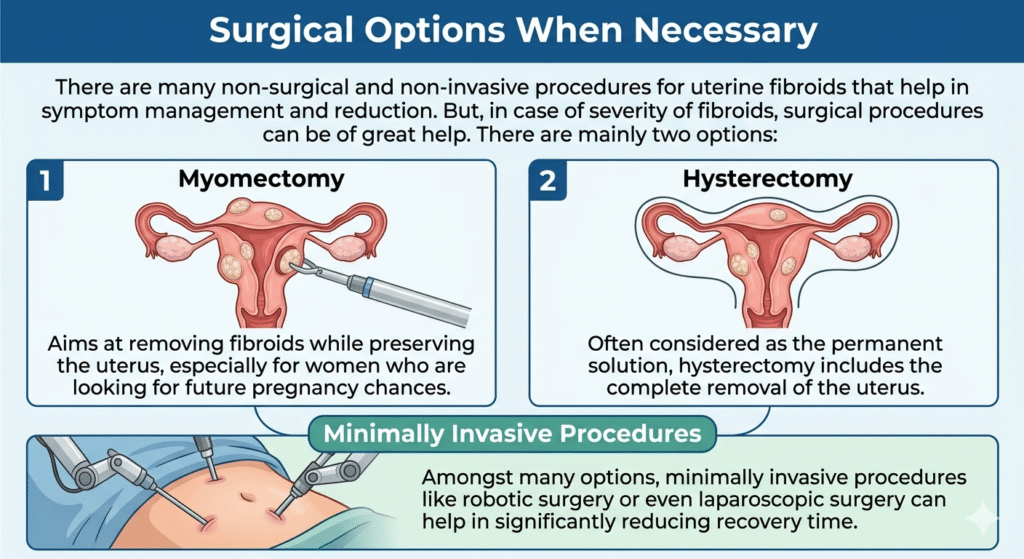
There are many non-surgical and non-invasive procedures for uterine fibroids that help in symptom management and reduction. But, in case of severity of fibroids, surgical procedures can be of great help. There are mainly two options:
✔️ Myomectomy: Aims at removing fibroids while preserving the uterus, especially for women who are looking for future pregnancy chances.
✔️ Hysterectomy: Often considered as the permanent solution, hysterectomy includes the complete removal of the uterus.
Amongst many options, minimally invasive procedures like robotic surgery or even laparoscopic surgery can help in significantly reducing recovery time.
Early intervention, detection and evaluation of fibroids can benefit you hugely when it comes to treatment and recovery. Some of the signs you can look out for are:
All of these signs are very easy to be neglected or overlooked, and that can worsen your symptoms even more. It is essential to seek medical help if you notice any of the symptoms.
Uterine fibroids are quite prevalent, but their effects differ from one woman to another. Although they are benign, they can still cause a lot of problems in a woman’s life, such as excessive bleeding, pain, and pressure. Asking questions such as “Which size of fibroid is considered dangerous?” or “Is it possible to treat fibroids without surgery?” is not only relevant but also depends on the situation.
The best part is that there are a number of ways to treat fibroids using modern medicine, ranging from pharmacological treatments to minimally invasive surgery. With the right diagnosis and treatment, most women can manage their fibroids and lead a healthy and active life.
No, uterine fibroids are almost always benign (non-cancerous). The chance of a fibroid being cancerous is extremely low (less than 1 in 1,000). They are not “pre-cancerous” and do not increase your risk of other cancers.
Most women with fibroids have normal pregnancies. However, depending on the size and location (especially submucosal fibroids that bulge into the uterine cavity), they can sometimes cause difficulty in conceiving or increase the risk of miscarriage. If you are planning a pregnancy, a specialist can help determine if removal is necessary.
This is often called a “fibroid belly.” When fibroids grow large (some can reach the size of a grapefruit or even a watermelon), they cause the uterus to expand, much like it does during pregnancy. This can lead to visible abdominal bloating and a feeling of “heaviness.”
Yes! A hysterectomy (removing the uterus) is no longer the only option. Modern alternatives include:
Myomectomy: Only the fibroids are removed, leaving the uterus intact.
Uterine Artery Embolization (UAE): A minimally invasive procedure that cuts off blood supply to the fibroids, causing them to shrink.
Hormonal Medications: These can manage bleeding and sometimes shrink the size of the growths.
Usually, yes. Fibroids are hormone-dependent (fed by estrogen). When estrogen levels drop significantly after menopause, fibroids typically shrink and symptoms like heavy bleeding often disappear.
While fibroids aren’t made of fat, very large ones can weigh several kilos, leading to an increase on the scale. Additionally, the abdominal bloating and “bulk” can make you feel and look heavier.
Red flags include: soaking through one or more pads every hour, passing blood clots larger than a coin, periods lasting longer than 7 days, or feeling constantly exhausted (anemic) due to blood loss.
There is no single “dangerous” number, but fibroids larger than 5 cm are more likely to cause significant symptoms. If a fibroid is pressing on your bladder (causing frequent urination) or your rectum (causing constipation), its size is a concern regardless of the exact measurement.
Yes. PCOS (Polycystic Ovary Syndrome) involves small fluid-filled cysts on the ovaries and is a hormonal/metabolic disorder. Fibroids are solid muscular growths in the uterus. While both cause period issues, they are treated very differently.
If you have a myomectomy, there is a chance new fibroids may grow over time. Only a hysterectomy is a 100% permanent cure, but for many women, the relief from a myomectomy or UAE lasts for many years or until menopause.
While stress doesn’t directly create a fibroid, high stress levels can disrupt your hormones (like estrogen and progesterone), which are the primary “fuel” for fibroid growth. Managing stress is a key part of holistic recovery.
WhatsApp us