If you run frequently, whether it’s for long-distance marathons, gym treadmill sessions, or early morning neighbourhood runs, you’ve undoubtedly at least once encountered some kind of knee pain. Even experienced runners may have pain, stiffness, or ailments that require them to take unneeded rests since the knees bear the majority of the impact during running if the muscles surrounding them are weak.
The good news? With the correct strengthening regimen, the majority of knee-related running issues can be avoided. Every runner should perform knee workouts to preserve strength, enhance form, and increase endurance; they’re not only for those who currently have pain. Consider it routine upkeep for the “engine” that propels you forward.
Why Knee-Strengthening Exercises Are Important for Runners?
Prior to beginning the workouts, it is helpful to comprehend the significance of knee work.
Every time you run, the stress is absorbed by your knee joint. The knee joint must bear more weight than it should if the surrounding muscles, especially the quadriceps, hamstrings, calves, hips, and glutes, are weak. Eventually, this results in:
Running-related knee pain
Soreness after a run
Diminished operational efficiency
Increased risk of conditions, including IT band syndrome and runner’s knee
In addition to protecting the knee, strengthening these supporting muscles enhances running efficiency, stride power, and posture.
Exercises for Runners to Strengthen Their Knees
These exercises enhance alignment and target the main muscles supporting the knee, allowing you to run more smoothly and for longer.
Excercise 1: Squats on the wall
The three muscular groups that perform the majority of the effort during running, the quadriceps, hamstrings, and glutes, are best activated by wall squats.
How to carry it out?
1. With your back straight against the wall, choose a position about one foot away from it.
2. Bend your knees slowly and slide downward.
3. When your knees are at a straight angle, stop.
4. After a few seconds of holding, get back up.
Why does it function?
Wall squats improve the knee joint’s ability to withstand impact during running by toning the muscles above the knee and engaging the glutes.
Pro tip: Place an exercise ball between your back and the wall for smoother motion.
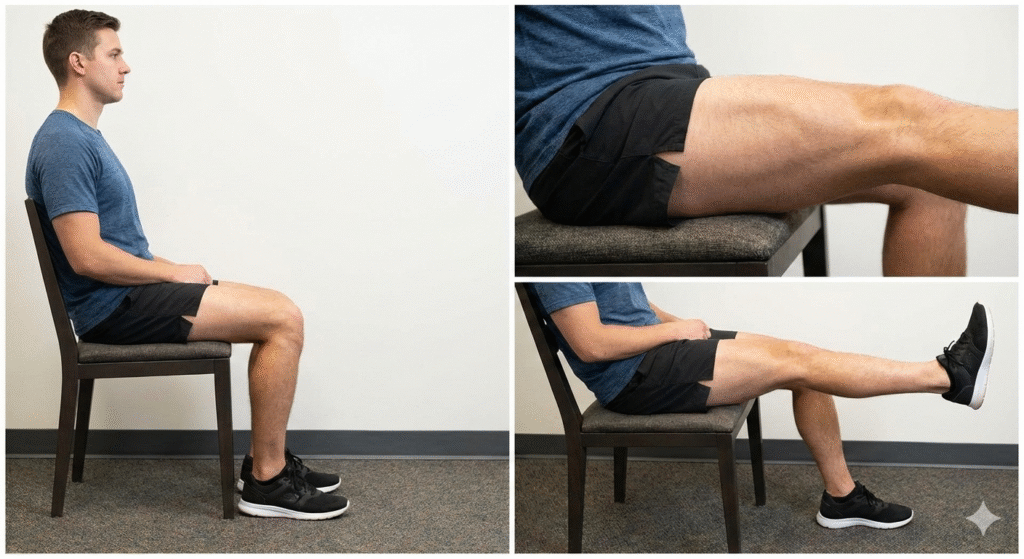
Exercise 2: Seated Leg Extension
Although this exercise appears simple, it strengthens the stabilizing muscles surrounding the kneecap and effectively isolates the quadriceps.
How to carry it out?
1. Take a tall seat in a chair.
2. Lift your right leg slightly off the ground and straighten it.
3. Hold your thigh muscles taut for five seconds.
4. Repeat on the opposite side after lowering the leg.
Why does it function?
Stronger quadriceps prevent fatigue-based strain and enhance knee alignment with each step.
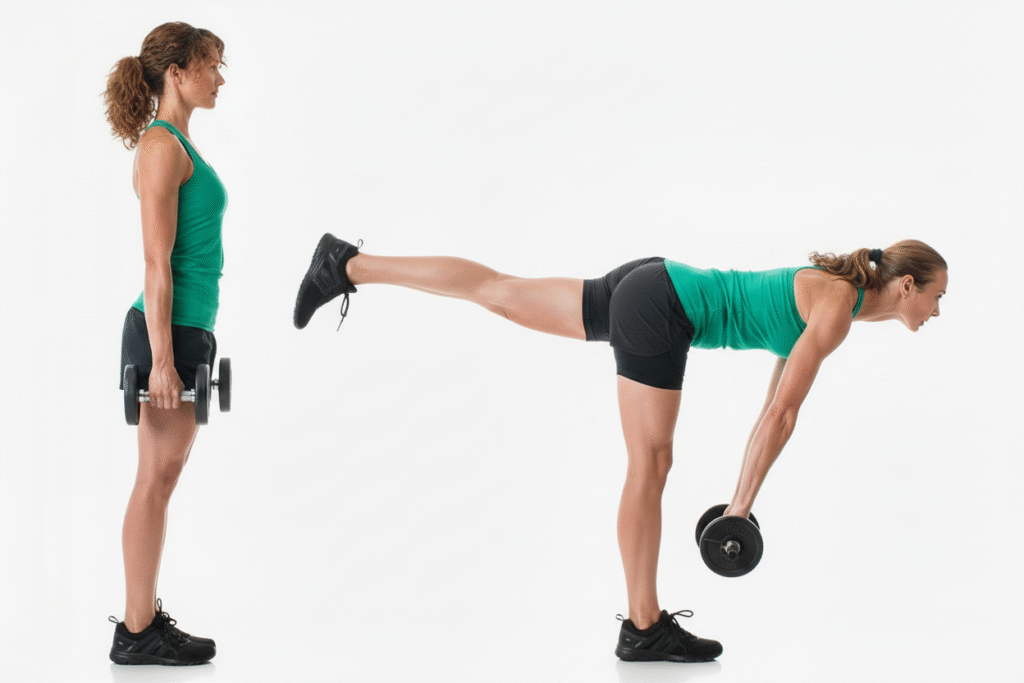
Excellent for the core, hamstrings, and glutes, this exercise tests balance and simulates running.
How to carry it out?
1. Place both feet hip-width apart while standing.
2. Raise one leg just a little bit off the ground.
3. Raise the elevated leg behind you while bending forward at the hips.
4. A straight line should be formed by your lifted leg and torso.
5. Get back up on your feet and exchange sides.
Why does it function?
It trains the body to stabilize the knee during single-leg impact, which is precisely what occurs with each stride while running, and it strengthens the entire back-side chain.
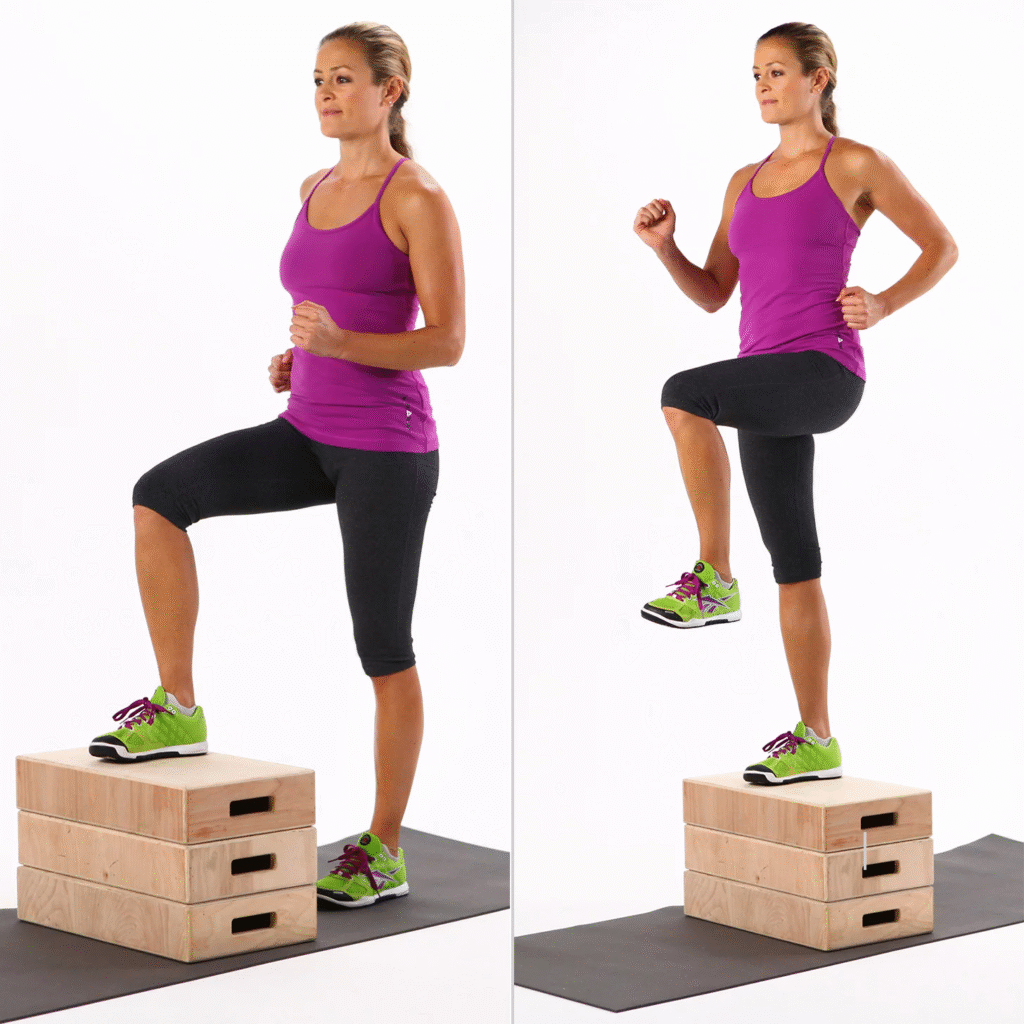
A runner’s best friend for developing strong legs without putting undue strain on the knees is the step-up.
How to carry it out?
1. Place yourself in front of a solid bench or step.
2. Take a step forward and bring your opposing knee up to your chest.
3. Go back to the floor and do it again.
Why does it function?
Step-ups teach the knee how to produce power when pushing upward and absorb shock when descending, two crucial components of a successful running stride.
Additional Advice for Keeping Your Knees Safe While Running
Strength training is just one aspect of the problem. These daily routines are also important:
Wear supportive running shoes, stay hydrated to preserve joint lubrication, warm up before and cool down after a run, and avoid increasing mileage too soon. Also, make sure to do these exercises in small intervals, rather than in big gaps, as it could also cause muscle cramps.
3. Walking or running while making a clicking or grinding sound
4. Inability to support weight on the leg
After that, it’s time to stop managing yourself and get evaluated. A mild strain can be treated early to avoid becoming a serious injury.
A sports physician or physiotherapist might suggest:
1. Analysis of gait (to improve running form)
2. Customised program for strengthening
3. Ultrasound therapy and manual therapy
4. Rehabilitation tailored to running
5. Orthopedic assessment in the event that structural damage is suspected
Early management helps runners return to their track more quickly and safely, so there’s no need to wait until pain becomes intolerable.
Concluding Remarks
One of the easiest and most satisfying types of exercise is running, but knee pain can soon make it less enjoyable. The key is to run more intelligently rather than less. You may strengthen your knees, enhance your gait, and develop long-lasting endurance by adding knee-strengthening exercises to your weekly routine.
Better performance, fewer injuries, and more fulfilling miles ahead are all correlated with a stronger physique. Even if you feel the need to contact a professional, you may visit Jain Multispeciality Hospital for the best experience. The staff and doctors at the hospital are quite helpful and always on their toes to treat you.
Disclaimer: This article is for informational purposes only. Always consult with a qualified healthcare professional, sports medicine physician, or physiotherapist before starting a new exercise program, particularly if you have existing knee pain or injury history. The information provided should not replace professional medical advice.